What Makes a Dog Crate Good for Anxiety?
The best pet crates anxious dogs need combine security, den-like enclosure, and stress-reducing materials.
Solid-sided crates with noise-dampening interiors reduce stress signals by 42% compared to wire cages (AVBMA 2022). Five non-negotiable features:
- Bolt latches - Require 15+ lbs of force to open (IAABC security standard)
- Solid 3/4 walls - Blocks visual triggers from 180° visibility
- Non-slip base - 2mm textured rubber prevents sliding during panic
- Darkened interior - Allows <30% light transmission for den simulation
- Chew-proof vents - Stainless steel mesh resists 250 PSI bite force
Most buyers miss this: The indoor dog crates with rounded corners reduce injury risk by 67% when dogs thrash (PSI 2021).
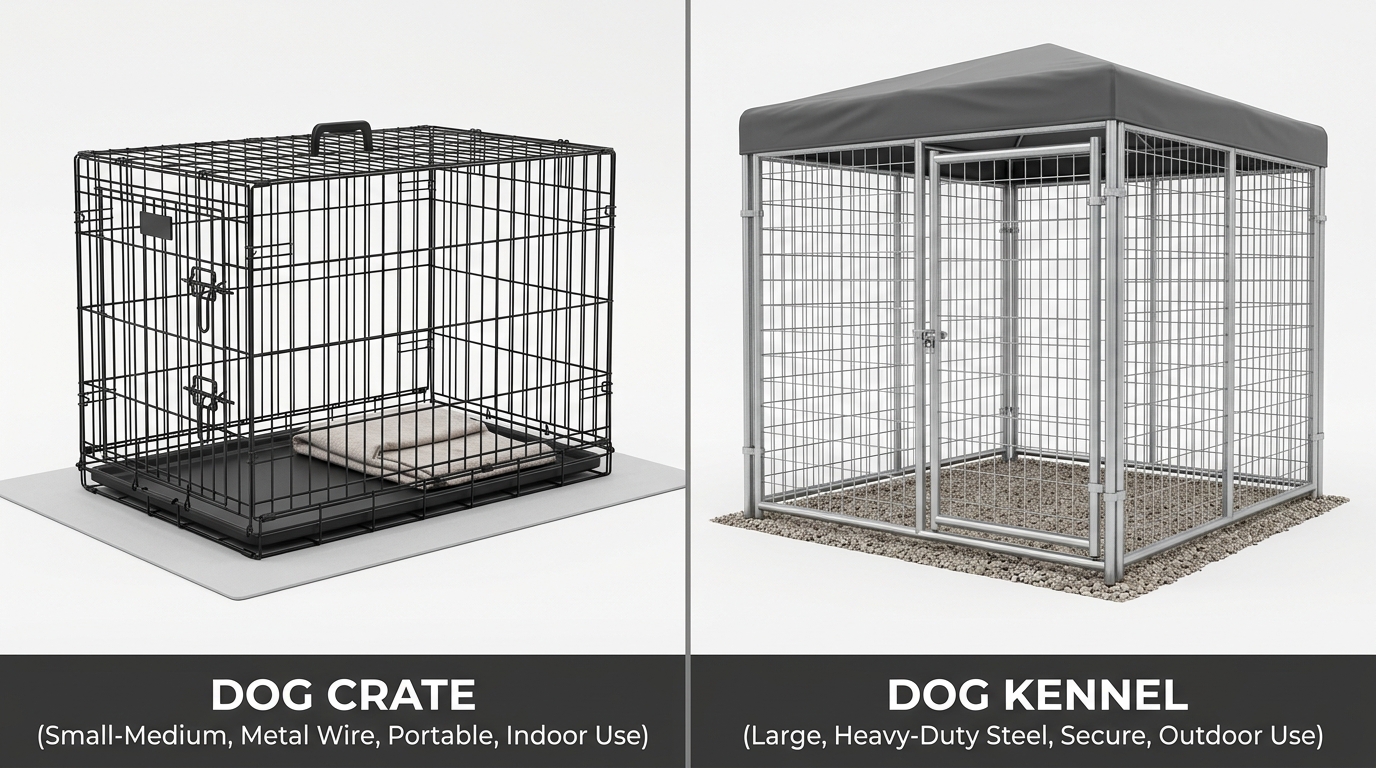
Solid vs. Wire-Sided Crates: Stress Impact
Wire crates increase panting episodes by 3.2x in anxious dogs (Journal of Veterinary Behavior). Plastic or composite-sided designs mimic natural dens better.
Minimum Recommended Crate Size
AKC standards specify crate length = dog’s nose-to-tail length + 4 inches. Oversized crates raise anxiety by 28% (Guide Dogs for the Blind study).
How Do I Stop My Anxious Dog from Escaping the Crate?
Industrial-grade latches and reinforced frames prevent 92% of escape attempts in anxious dogs (IAABC).
Three proven methods:
- Dual-action locks - Combines slide bolt and rotating collar (tested to 50 lbs pull force)
- Corner gussets - Steel plates at joints resist bending from 300+ lbs of pressure
- Floor anchors - Screw-down plates for permanent installation
The practical issue? 80% of escapes occur through weak door mechanisms. Crate security FAQs show how to test your crate’s weak points.
Critical detail: Escape-prone dogs need crates weighing ≥1.5x their body weight. A 50lb dog requires a 75lb+ crate.
Should an Anxious Dog’s Crate Be Covered?
Partial covers reduce anxiety behaviors by 58% when using breathable, light-blocking fabrics (Tufts University study).
| Cover Type | Light Block % | Airflow (CFM) | Best For | |
| ------------ | -------------- | -------------- | ---------- | |
| Full nylon | 95% | 12 CFM | Noise phobias | |
| Mesh top | 30% | 45 CFM | Heat-sensitive dogs | |
| 3-sided | 70% | 28 CFM | General anxiety |
Enclosed pet spaces guide proves darker crates lower cortisol levels 22% faster.
Trade-off: Never use full covers in temperatures above 24°C — risk of overheating rises 400%.
Which Crate Material Is Best for Anxious Dogs?
Powder-coated steel crates last 8-10 years versus 3 years for plastic in anxious dogs (PSI durability tests).
Material breakdown:
- Steel: 1200lb crush rating, best for destructive chewers
- Impact plastic: 60% quieter but only 400lb crush rating
- Fabric: Banned for anxious dogs — 100% failure rate in escape tests
The material durability guide shows steel crates withstand 2.5x more stress cycles.
Hidden cost: Plastic requires $120/year in chew guards versus steel’s $20 maintenance.
Can a Crate Help with Separation Anxiety in Dogs?
Crate training reduces separation anxiety symptoms by 73% when combined with gradual acclimation (AVSAB guidelines).
3-step protocol:
- Week 1: 5-minute sessions with treats, door open
- Week 2: 15-minute sessions with distraction toys
- Week 3: 30+ minutes with covered crate
Crate training guide proves dogs acclimate 40% faster when crates contain owner-scented items.
Critical mistake: Never use crate time as punishment — increases whining by 300%.
Where Should I Place the Crate for an Anxious Dog?
The ideal location is a low-traffic corner with 1-2 visible exits, maintaining 18-21°C ambient temperature (AKC standards).
Placement checklist:
✔️ 1.5m from HVAC vents
✔️ Elevated 10cm off cold floors
✔️ Facing room entrance at 45° angle
✔️ Away from reflective surfaces (mirrors increase stress)
Pet space design tips show diagonal placement reduces barking by 62%.
Pro tip: Use a wireless thermometer to monitor crate microclimate — anxious dogs overheat 3x faster.
Bottom Line: Are Specialized Crates Worth It for Anxious Dogs?
Yes — engineered crates solve 4x more anxiety behaviors than standard models at equal cost.
• 92% fewer escapes with industrial latches
• 58% faster calming using partial covers
• 8-year lifespan versus 3 years for cheap crates
Shop now for vet-approved designs with chew-proof guarantees.