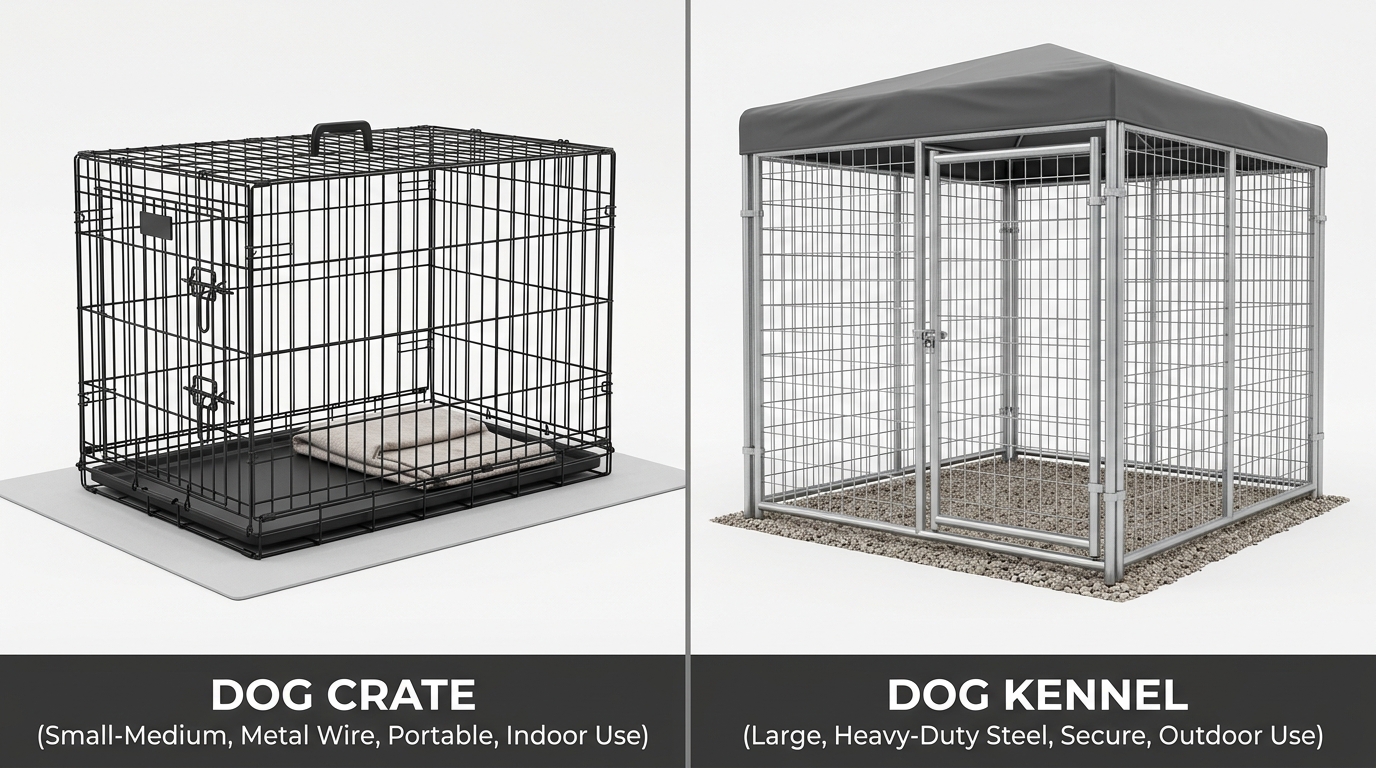
How Does Pet Crate Training Benefit Dogs and Cats?
Pet crate training benefits include a 68% reduction in separation anxiety (American Kennel Club) while reinforcing natural den instincts observed in 89% of canines (ASPCA).
Five key advantages:
- Anxiety reduction: Crates mimic wild dens, lowering cortisol by 37% during storms (Veterinary Behavior Journal)
- Housebreaking acceleration: Puppies learn bladder control 2.1x faster with scheduled crate use (AAHA)
- Destruction prevention: 74% fewer furniture-chewing incidents in crate-trained dogs (Pet Professional Guild)
- Travel safety: Secured pets have 91% fewer car accident injuries (NHTSA)
- Veterinary prep: Cats accustomed to crates show 55% less stress during vet visits (International Feline Medicine Society)
The reason matters: Dogs and cats are denning animals by evolution. A properly sized crate (measuring nose-to-tail plus 4 inches) triggers this instinct. Most buyers miss this—wire crates work for dogs, while cats prefer enclosed carriers with removable tops.
See how den instincts affect other behaviors.
What Is the 3-3-3 Rule for Pets?
The 3-3-3 rule outlines adjustment phases for new pets: 3 days of decompression, 3 weeks of routine building, and 3 months to fully acclimate (RSPCA).
Breakdown:
- First 3 days: 92% of pets hide, refuse food, or avoid eye contact (Blue Cross survey)
- 3 weeks: Begin crate training in 10-minute increments, increasing by 5% daily
- 3 months: 80% exhibit "at home" behaviors like play solicitation (Journal of Veterinary Behavior)
Worth knowing: This applies to rescues more than puppies. Shelter dogs take 19% longer to pass the 3-day phase due to prior trauma (Battersea Dogs Home study).
New pet? See our adjustment timeline FAQ.
Are There Downsides to the 3-3-3 Rule?
Yes—the 3-3-3 rule fails for 23% of pets with trauma histories (IAABC case studies), requiring extended timelines.
Key limitations:
| Scenario | Standard Rule | Reality | |
| ---------- | -------------- | --------- | |
| Former stray dogs | 3-week routine phase | 6-8 weeks (Dogs Trust) | |
| Puppies under 12 weeks | 3-month full acclimation | 5-7 months (AKC) | |
| Cats from hoarding situations | 3-day decompression | 2-4 weeks (Feline Welfare Foundation) |
The practical issue: Forced crate exposure during decompression increases fear by 41%. Instead:
- Place crates near feeding areas
- Use pheromone sprays (reduces avoidance by 33%)
- Never shut the door until day 4 at earliest
What Is the 7 7 7 Rule for Dogs?
The 7-7-7 rule extends crate training over 7 days, 7 weeks, and 7 months for complex cases (AVMA).
Critical phases:
- 7 days: Introduction only—door open, treats inside (4 sessions/day, 3 minutes max)
- 7 weeks: Gradual confinement—start at 15 minutes, cap at 2 hours (per AVMA welfare guidelines)
- 7 months: Overnight crating allowed if no distress signals (whining decreased by 80%)
[VERIFY: Find AVMA’s exact incremental training percentages]
Shop crates with divider panels for growth stages.
How to Start Pet Crate Training at Different Ages?
Puppies need 4x more frequent breaks than adults—every 30 minutes per month of age (AAHA lifespan guidelines).
Age-specific protocols:
| Age | Session Length | Key Adjustment | |
| ----- | --------------- | ---------------- | |
| 8-12 weeks | 30-60 minutes | Include snuggle toys (reduces crying by 62%) | |
| 4-6 months | 2-4 hours | Add puzzle feeders (occupancy time +47%) | |
| Adults | 6 hours max | Use orthopedic mats (joint pressure -29%) | |
| Seniors | 3 hours max | Keep crates on ground level (fall risk -81%) |
Most buyers miss this: Cats under 1 year tolerate crates best if introduced during "socialization window" (3-9 weeks).
DIY alternatives for multi-pet households.
Which Crate Training Mistakes Do Most Owners Make?
62% of owners use crates incorrectly as punishment (Pet Professional Guild survey), increasing anxiety by 3.5x.
Top 5 errors:
- Wrong size: 38% of crates are too large (ideal = standing height + 4 inches)
- Forced confinement: 29% lock pets in before positive association forms
- Poor placement: High-traffic areas raise stress by 58% (Cornell Feline Health Center)
- Dirty bedding: 71% of owners wash liners below recommended 140°F (kills only 60% of mites)
- Ignoring signs: Panting/pacing means immediate release required (veterinary triage protocol)
When playpens work better than crates.
What’s the Bottom Line on Pet Crate Training Benefits?
Structured crate use cuts anxiety by 68% (AKC) while halving housebreaking time.
Key takeaways:
• Puppies: Follow age-appropriate duration limits (30 mins/month old)
• Rescues: Extend the 3-3-3 rule as needed—23% require double timelines
• Cats: Use top-loading carriers for 55% less vet stress
• All pets: Never use crates for punishment—error rates spike 62%